 Christine Spiers, CVA

Most organizations I work with know something needs to change, but they usually bring me only the problem they can see. The program is harder to run than it was three years ago. The same issues keep returning. One coordinator is carrying too much. A new system promised to help, but the workload hasn’t eased.
These are all real problems. They’re often symptoms of something bigger too. The problem you can see isn’t always the problem you need to fix.
I’ve seen this pattern across many of the 60-plus organisations I’ve worked with. An organization names the problem it can see: too few volunteers, an outdated database, or a structure that no longer fits. It invests in a fix. Twelve months later, the pressure is back in a different form.
The fix wasn’t wrong. It just didn’t reach the whole problem.
Why Start With a Health Check
Programs rarely become complex on purpose. They start small, with one coordinator and informal ways of working. Then more teams get involved and volunteering spreads across sites and departments, each with its own way of doing things. New technologies get added along the way, responsibilities blur, and knowledge settles with one person.
None of this happens through one decision, so no one sees it happen.
-
Workarounds turn into “how things are done here”.
-
Compliance gaps go unspoken.
-
Risks stay hidden until they surface as retention pressure, succession risk, or a board question no one can answer.
A health check helps you step back and look beneath the symptoms for patterns, pressure points, and dependencies. You can start one yourself, with no budget. You need honest answers to good questions and a willingness to write “don’t know” when that’s the truth. “Don’t know” is often the most useful answer on the page because it shows you where to look next.
When the answers point to something bigger or you’re too close to see the pattern, that’s when an outside view helps.
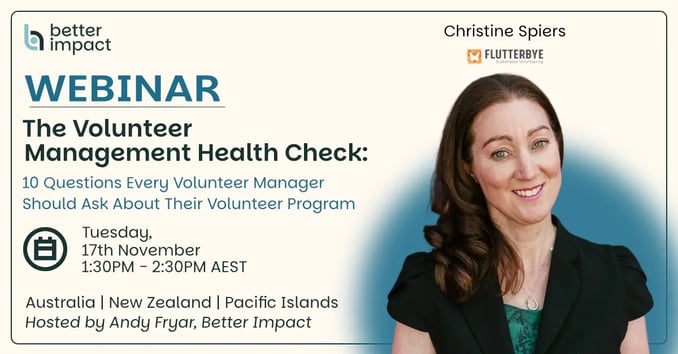
In my upcoming Better Impact webinar, The Volunteer Management Health Check, we’ll work through all ten questions together.
Here are three to start with.
1. If you were away for a month, what would stop?
This question reveals where the program depends on one person. If the honest answer is “most of it”, the program is running on that person’s knowledge and relationships.
I’ve worked with more than one organization that had the same volunteer manager for over 20 years. When that person left, much of how the program ran went with them. The team left behind had to piece it together under pressure.
The volunteer manager hasn’t done anything wrong. The organization created this arrangement, usually without anyone deciding to. When one person holds the program together, that’s key-person dependency. It’s an organizational risk, not a staffing issue.
This week, list what lives only in your head, your inbox, or a spreadsheet no one else understands. Next to each item, write who could pick it up. The blank spaces are your answer.
2. Do your numbers show what the program achieves and whether it can last?
Most programs measure activity well: hours contributed, volunteers onboarded, and shifts filled. These figures matter. They show the program is busy. They don’t show what that effort achieves or whether the organization can sustain it.
Good numbers show both. Start with impact. Hours mean more to a leadership team when they’re linked to outputs: the visits completed, the sites cared for, the people supported. They mean more again when those outputs connect to the goals in the strategic plan.
Then look at health. A program can record its highest-ever volunteer hours while experienced volunteers are leaving and the coordinator is working weekends.
Look at what you report now. Could it show what volunteers contribute to your organization’s goals or tell you whether the program will still be working well in two years? Good places to start are first-year retention, the time from application to first shift, and how much of the work depends on a small number of people.
3. When volunteers give feedback, what changes?
Many organizations survey volunteers every year. Fewer can name a decision that changed because of what volunteers said.
When feedback goes in and nothing visible comes out, volunteers notice. Response rates fall and comments get shorter. People stop answering because they no longer believe their input matters.
Volunteer experience is organizational data. It reveals clumsy processes and roles that have drifted, often before those issues surface anywhere else.
A simple test is to name one thing that changed this year because of volunteer feedback, then ask whether volunteers know it changed.
The Other Seven
The full set asks who owns volunteering across your organization, which risks you’re managing from memory, how many places hold volunteer information, how many steps sit between a first enquiry and a first shift, whether role descriptions still match what volunteers do and where your team is working around its systems.
The final question asks what you would protect, strengthen, redesign or stop. Not everything needs fixing. Some things are working and need protecting. Good investment decisions start with knowing what’s structural and what’s worth keeping.
If You Lead Volunteer Managers
Each question also has a version for senior leaders. “If you were away for a month, what would stop?” becomes a continuity question: “Which parts of our volunteer program would stop if one person left tomorrow?” Question 2 becomes a governance question: “Can we show what volunteers contribute to our goals and whether the program can last?” Both belong on the leadership agenda.
Join the Webinar
In the session, you’ll mark each question Working well, Working with effort, or Don’t know, look for patterns in your answers, and leave knowing where to focus next. You’ll also have language you can take to your leadership team.
Bring a colleague if you can, ideally someone who sees the program from a different seat. These questions work best when more than one person answers them, because the gaps between your answers are part of the picture.
Register for The Volunteer Manager's Health Check webinar on November 17th.
Featured Posts
- Mastering Volunteer Management: The Ultimate Nonprofit Guide
- 18 Best Volunteer Management Software Tools for Nonprofits
- Nonprofit Volunteer Recruitment: Overview + Top Strategies
- Volunteer Training: How to Set Volunteers up for Success
- Volunteer Appreciation: Getting Started + 10 Top Ideas