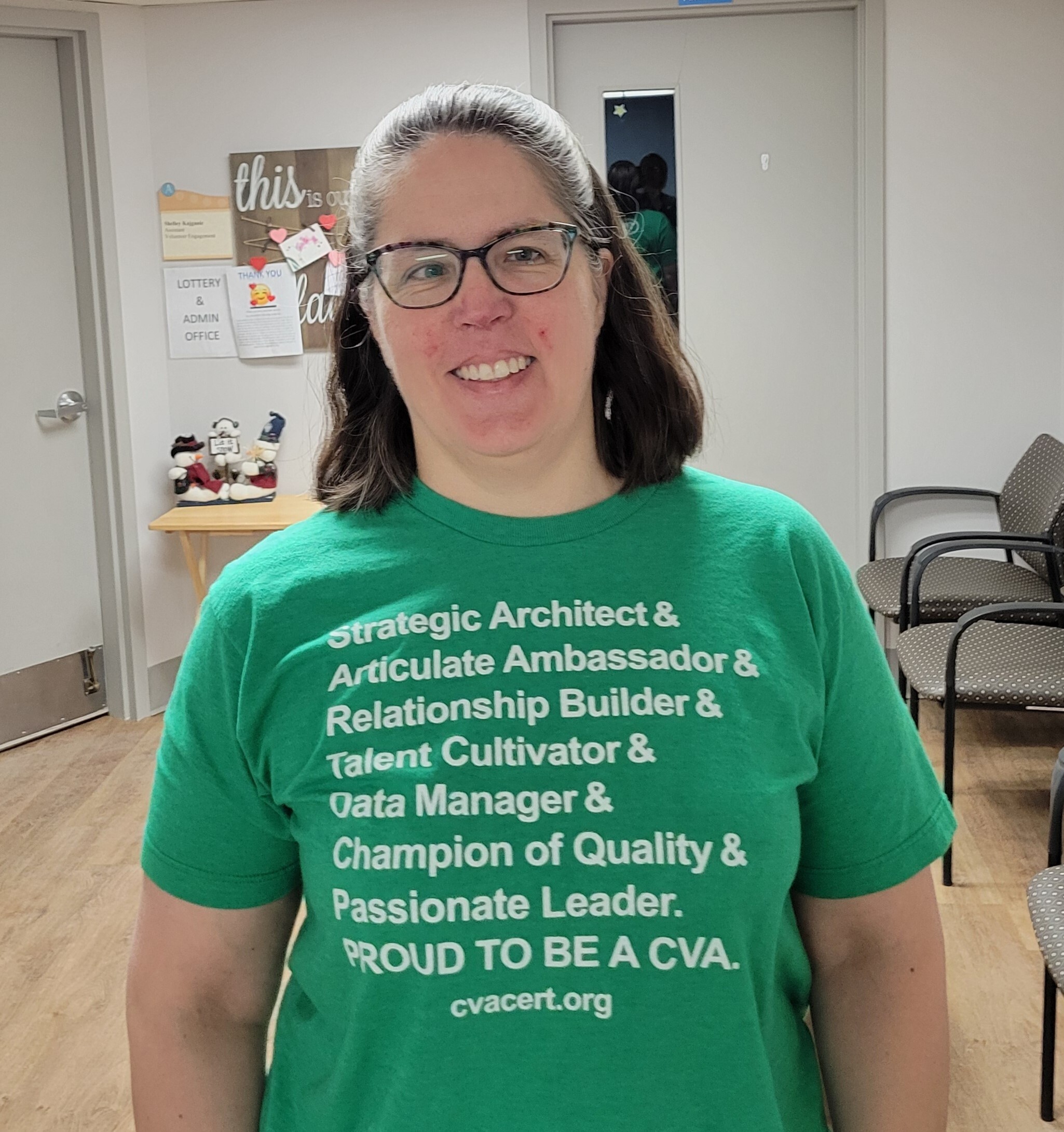
 Kari Astles, Vice-President of Volunteer Management Professionals of Canada (VMPC)
Getting staff to "buy in" to volunteer engagement is only the first step. In this session, Kari Astles, CVA shared how to move beyond buy-in and build an organizational culture where staff see volunteers as strategic partners, starting with a clear philosophy of volunteer engagement that everyone helps shape.
Recorded live on Tuesday, November 10, 2026. Running time: about an hour, including audience Q&A.
PDU credit
Get a PDU certificate
Complete the form to receive your Certificate of Completion, which can be used towards earning Professional Development Units (PDUs).
Session materials
Download the resources
Access the slides from this session, plus a guide to help you choose the right volunteer management software.
Session Slides
PPTX · Presentation slides · Kari Astles
Volunteer Management Software Buyer's Guide 2026
Guide · Better Impact
In this post
- Why buy-in isn't enough
- What staff concerns are really telling you
- Why a philosophy of volunteer engagement matters
- Questions to answer before you write one
- Sample philosophy of volunteerism
- Bring staff into the vision
- Build stronger staff-volunteer partnerships
- Signs your strategy is working
- What to do next
- From the Q&A
- Keep learning
- Meet the presenter
Key takeaways
- Staff buy-in is only one piece. Volunteer engagement succeeds when the whole organization owns it, not one leader of volunteers.
- Staff concerns like "volunteers take too much time" usually point to system issues, such as unclear expectations or competing priorities, rather than resistance to volunteers.
- A short, intentional philosophy of volunteer engagement keeps every department speaking the same language.
- Involve frontline staff and volunteers in shaping roles, policies, and strategy, not just leadership.
- Start collecting volunteer impact stories now so they're ready for reports, newsletters, and staff conversations.
Why buy-in isn't enough
Kari opened by asking attendees how staff in their organizations see volunteers: as helpers, program enhancements, or strategic partners. The chat showed a mix of all three, which is exactly the point. Asking staff to "buy in" to a program someone else designed only goes so far. The goal is to build the program with them.
Even the most skilled volunteer leaders struggle when the wider organization doesn't share the vision for volunteers. When staff at every level see volunteers as partners in mission delivery, collaboration gets easier, volunteers feel more welcome, and engagement lasts. That kind of culture takes ongoing communication, education, and relationship building, and it only holds when volunteer engagement is seen as everyone's responsibility.
What staff concerns are really telling you
Attendees shared the concerns they hear most: volunteers take too much time, training them is extra work, it's easier to do it myself, they'll take my job, and they don't have the right skills. Kari admitted she has said "it's easier to do it myself" more than once.
Her key point: these perceptions usually come from organizational systems, not individual resistance. Staff are being asked to do more with less, often in roles they were never trained for. Resistance is frequently a symptom of unclear expectations, competing priorities, or no shared vision. Yes, onboarding volunteers takes time up front, just like onboarding new staff. Framing it as an investment in the organization's future, not a hit to today's workload, changes the conversation.
So instead of asking "how do we get staff buy-in?", ask "how do we create a culture that values volunteer contributions?" Buy-in follows.
Why a philosophy of volunteer engagement matters
Kari asked a reflection question worth sitting with: if someone looked at your practices today, what would they conclude your philosophy of volunteerism is? And is that philosophy intentional or accidental?
Without an intentional philosophy, assumptions drive decisions, expectations vary from department to department, and volunteer engagement becomes reactive instead of strategic. A shared philosophy gets everyone on the same page about how volunteers are engaged and what's expected on both sides.
Kari pointed to a question from Susan Ellis's book From the Top Down as the foundation for any philosophy: if we had all the money we needed, would we still involve volunteers, and if so, why?
Questions to answer before you write one
Kari recommended a one-page tip sheet from Betty Stallings and Susan Ellis as a simple starting point. It walks you through a few key questions:
- Who counts as a volunteer? Are student placements, co-op students, or job shadows volunteers in your organization? The answer varies, so define it clearly.
- What roles do volunteers play? Direct client services, administrative support, fundraising, or something else.
- Are volunteers partners or helpers? The language you choose shapes how people see them.
- Are there activities volunteers can't do? Consider confidentiality, risk, and staff resistance, and whether those limits belong in your statement.
- How do staff view volunteer involvement? Look for biases or stereotypes that may be creating barriers.
That last question matters. When Kari joined her hospital, no volunteers supported its mental health programs. The reason turned out to be a past assumption that it wasn't safe. By completing a risk assessment with staff, creating a role description, and developing training, the hospital now has a successful staff-volunteer partnership in those programs. As Kari put it, volunteers can do almost anything, provided they have the training and support they need.
Sample philosophy of volunteerism
Philosophy statements range from one paragraph to a mini manual. Kari prefers short and succinct, because a brief statement is easier for staff and volunteers to remember, and you can post it around your organization, share it on your website, and include it in onboarding. Supporting documents can expand on the details.
Many attendees asked for the sample she shared. Here it is, written for a fictional small community food bank:
Template
Philosophy of Volunteerism: small community food bank
At Food Bank ABC, volunteers are valued partners in our mission to address food insecurity and build a stronger community. We are committed to creating meaningful, inclusive, and rewarding volunteer experiences that recognize the unique contributions of each individual. Through collaboration, respect, and shared purpose, volunteers, staff, and community partners work together to ensure all people have access to food with dignity and care.
Key points:
- Volunteers are valued partners
- Commitment to meaningful and inclusive volunteer space
- Shared purpose to address food insecurity
- Focuses on collaboration and respect
Whatever length you choose, Kari recommended including four elements: a commitment to meaningful volunteer involvement, recognition of volunteers as partners in mission delivery, shared responsibility for volunteer engagement, and a view of volunteerism as respectful, inclusive, and mutually beneficial.
Bring staff into the vision
A philosophy works best when staff help create it. Kari suggested four ways to start:
- Start interdepartmental conversations about expectations and challenges.
- Involve frontline staff, not just leadership. The manager who requests volunteer support may not see what the role looks like day to day.
- Create feedback opportunities through staff, volunteer, and client surveys.
- Develop volunteer roles collaboratively. A request form is a starting point, followed by a conversation about how the role will actually work.
Build stronger staff-volunteer partnerships
A few practical ideas that have worked well for Kari:
- Shadowing. Give new and existing staff the chance to shadow a volunteer and see the role from the volunteer's perspective.
- Impact stories and data. Kari keeps a simple spreadsheet of every great volunteer story she hears. Those stories feed impact reports, newsletters, social media, and staff conversations. You can't share stories you haven't captured.
- Alignment with strategy. Know your organization's strategic plan and show, with both numbers and stories, how volunteers contribute to it.
- Celebrate staff champions. Kari's organization has run staff-volunteer partnership awards where frontline volunteers nominate staff who make them feel welcome. Winners received a plaque and a plant for their department, a visible reminder for everyone.
Signs your strategy is working
How do you know volunteer engagement is truly integrated into your organization? Look for these signs:
- Leaders use consistent language. Not "we'll use a volunteer for that." As Kari reminded attendees, volunteers aren't stored in freezers to defrost when needed. They're partners in mission delivery.
- Volunteers are included in organizational communication. Kari spent her first year asking the CEO's office to add volunteers to memos addressed to "staff and physicians." Today, everyone is simply addressed as Team BCHS.
- Volunteers help shape strategy. Volunteers and volunteer engagement staff are consulted when the strategic plan is developed.
- Volunteers are part of program design from day one, not an afterthought, with roles tied to mission and strategy.
- Partnerships are recognized and celebrated. Staff nominate volunteers for awards, and that recognition means something different coming from them.
What to do next
- Create a philosophy of volunteer engagement if you don't have one. The tip sheet is an easy way to start.
- Facilitate a staff conversation. Kari's hospital hosts quarterly "Lattes with Leadership" events, which double as recognition and informal conversation between leaders and volunteers.
- Review role descriptions with both staff and volunteers to confirm they reflect what volunteers actually do.
- Gather feedback on current challenges and new ways volunteers could support your mission.
- Share volunteer impact across your organization and community.
- Review policies through a volunteer engagement lens, and invite volunteers to take part.
Kari closed with three questions to take back to your team: What's one thing your organization does unintentionally that sends a message about how volunteers are valued? If you could change one staff perception about volunteers tomorrow, what would it be? And if a new volunteer or employee started next week, what would show them that volunteers are strategic partners rather than just helpers?
From the Q&A
Where do you start when some staff are still resistant?
Find the champions. Look for staff who are already working well with volunteers, learn what's working for them, talk to the volunteers in their department, and use that as a stepping stone for conversations elsewhere. It doesn't need to be formal. Some organizations have volunteers or the leader of volunteers present at new staff orientation, and Kari meets with every new leader to ask how they've engaged volunteers in past roles.
How can volunteers help staff understand their value?
Let volunteers show what they do. Many volunteers have been with an organization longer than some staff, and they enjoy sharing how they support the mission. Hearing directly from volunteers can ease concerns about whether they're skilled enough for certain roles.
How do you approach volunteer engagement in a unionized environment?
Kari noted this topic deserves its own webinar. In the meantime, she recommended connecting with peers through the Volunteer Management Professionals of Canada members-only forum or Better Impact user groups, and reaching out to people you met in the session chat or on LinkedIn.
Keep learning
- Creating a Statement of Philosophy on Volunteer Engagement, tip sheet by Betty B. Stallings with Susan J. Ellis, Energize Inc.
- From the Top Down: The Executive Role in Successful Volunteer Involvement by Susan J. Ellis
- Certified in Volunteer Administration (CVA), or connect with other credential holders in the CVA Community
- Browse past sessions in the Better Impact Webinar Library
Meet the presenter

Kari Astles, CVA
Kari Astles, CVA, is Senior Coordinator of Volunteer Engagement at Brant Community Healthcare System, a two-site hospital in Brantford, Ontario. With 28 years in volunteer engagement across healthcare, mental health, palliative care, education, and food security, she holds the CVA credential and the CVRM certification through PAVRO. Kari is Vice President of Volunteer Management Professionals of Canada and co-leads Better Impact's Canadian Hospital User Group. A lifelong volunteer, she started volunteering at age eight.
Featured Posts
- Mastering Volunteer Management: The Ultimate Nonprofit Guide
- 18 Best Volunteer Management Software Tools for Nonprofits
- Nonprofit Volunteer Recruitment: Overview + Top Strategies
- Volunteer Training: How to Set Volunteers up for Success
- Volunteer Appreciation: Getting Started + 10 Top Ideas